Broken and Beloved: How Streamers Who Get Real About Their Struggles End Up With the Most Devoted Fanbases
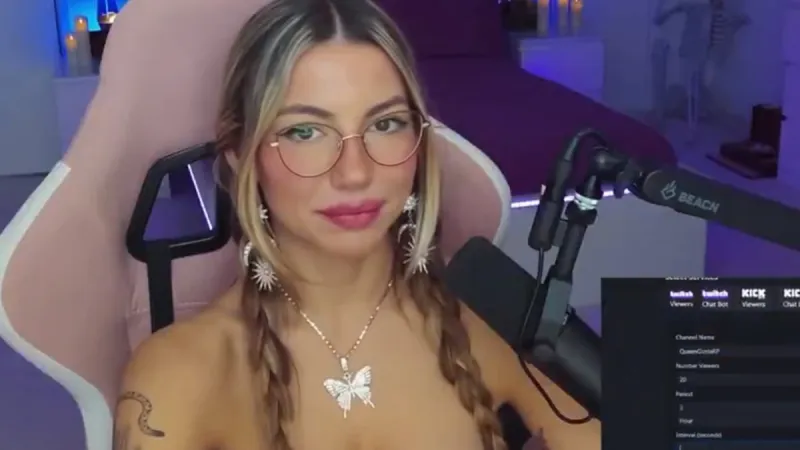
Photo: streamer emotional moment with live chat support on screen, via www.dexerto.com
There's a counterintuitive truth hiding inside the most successful live streaming communities: the moments that look like weakness on camera are often the ones that cement the deepest loyalty. When streamers drop the highlight reel and get honest about what's actually going on, something unexpected happens — viewers don't leave. They lean in harder.
We've been conditioned by decades of traditional entertainment to expect our on-screen personalities to be polished, composed, and aspirational. Hollywood spent a century building the machinery of manufactured charisma. And then live streaming came along and blew the whole thing up.
The Unscripted Moment That Changes Everything
It usually starts small. A streamer is mid-session — maybe grinding through a game, maybe just chatting — and something slips. A comment about a rough week. A pause that goes a little too long. A quiet admission that things aren't great right now. And instead of the awkward silence you might expect, the chat explodes. Not with trolls, but with support.
This isn't an accident. It's not even really a strategy, though some creators have started to understand it well enough to lean into it intentionally. What's happening in those moments is something that traditional media literally cannot manufacture: real-time human connection at scale.
When a streamer on a major network breaks character, there are producers, editors, publicists, and legal teams ready to smooth it over before it ever reaches an audience. In live streaming, there is no buffer. What you see is what happened. And that rawness — that unmediated realness — is worth more to viewers than almost any production value money can buy.
Why Vulnerability Works Differently on Live Platforms
Psychologists have a term for the one-sided emotional bond viewers form with on-screen personalities: parasocial relationships. And while those bonds exist in every form of media — you probably felt something when your favorite TV character died — live streaming cranks the intensity up several notches.
The reason is interaction. When you're watching a streamer who's having a hard time and you type something supportive in chat, and they read it out loud and say thank you — that's not a parasocial moment anymore. That's a real exchange. You actually did something that affected another person. The relationship stops being entirely one-sided, even if just for a second.
That micro-moment of genuine connection is wildly powerful. Viewers who experience it don't just feel like fans. They feel like participants. Like they matter to the stream's story. And people who feel like they matter to something don't walk away from it easily.
Real Streamers, Real Rallies
Look across the streaming landscape and you'll find this pattern repeating itself constantly. Streamers who've talked openly about burnout, mental health struggles, financial pressure, or personal loss almost universally report that those streams — the hard ones, the uncomfortable ones — became turning points in their community's growth and cohesion.
One mid-sized variety streamer on Twitch described going live during a period when she was seriously considering quitting entirely. She hadn't planned to say anything about it. But partway through the stream, she just told her viewers the truth: she was exhausted, she wasn't sure if she could keep going, and she didn't know what came next. The stream ran three hours longer than planned. Her subscriber count jumped. The Discord lit up with messages that were still coming in days later.
What she didn't expect was that the community also changed after that stream. Regulars started looking out for each other more. New viewers who'd found the VOD said they subscribed specifically because the stream felt real in a way other content didn't.
That's the parasocial payoff in action — and it compounds. Once a community rallies around a streamer's vulnerability, the shared experience becomes part of the community's identity. They were there for that moment. That's something they hold collectively.
The Contrast With Manufactured Persona
This dynamic throws traditional entertainment's playbook into sharp relief. The conventional wisdom in Hollywood and mainstream media has always been to protect the talent's image. Keep it aspirational. Keep it polished. Don't let the audience see the seams.
And for a long time, that worked — because there was no alternative. Audiences didn't have access to anything more real, so the manufactured version was the best available product.
Live streaming broke that monopoly. Now viewers can tune into someone who's genuinely stressed about rent, genuinely excited about a small win, genuinely unsure what they're doing with their life — and they can do it for free, in real time, with the ability to talk back. The comparison isn't even close for a lot of viewers, especially younger ones who grew up with access to both.
The streamers who try to replicate the polished persona model on live platforms often find themselves struggling to build the kind of fierce, sticky loyalty that their more authentic counterparts seem to accumulate almost effortlessly. You can't fake realness in real time. People notice.
When It Gets Complicated
It's worth being honest about the other side of this, though. Vulnerability in live streaming isn't without risk, and not every streamer handles it in ways that are healthy for themselves or their communities.
There's a line — not always easy to identify — between sharing something real and leaning on an audience for emotional support in ways that can become unhealthy for everyone involved. Some viewers respond to streamer vulnerability by developing attachments that go beyond what's appropriate or sustainable. Some streamers, intentionally or not, use emotional disclosure as a retention tactic in ways that border on manipulation.
The streamers who navigate this well tend to share authentically without making their audience responsible for their wellbeing. They're honest without being dependent. They invite community without fostering codependency. It's a balance, and it takes some self-awareness to maintain — especially when the support feels good and the temptation to lean further into it is real.
What This Means for the Future of Live Content
The broader shift happening here is significant. Live streaming is actively redefining what audiences expect from the personalities they follow. Polished is losing ground to genuine. Perfect is less interesting than present.
That's a big deal not just for individual streamers, but for the entire entertainment industry trying to figure out how to compete with live platforms for audience attention. You can't manufacture the kind of loyalty that gets built in a chat room at 11 PM on a Tuesday when a streamer admits they're not okay and four thousand people decide, collectively, that they're going to show up for them.
That's something live streaming does that nothing else really can. And it's a big part of why the platforms built around real-time connection keep growing while traditional formats scramble to stay relevant.
The streamers who understand this — who get that their imperfections are actually assets — aren't just surviving. They're building something that lasts.